


Why Is My Dog Limping on His Back Leg?
One moment your dog is bounding through the backyard without a care in the world, and the next, he’s holding up a back leg, hobbling across the floor, or refusing to put weight on it at all. It’s the kind of thing that stops you in your tracks. A dog limping on a back leg is your pet’s way of telling you something hurts, and as a dog owner, that message lands hard. The good news is that rear leg limping in dogs is one of the most common and treatable conditions veterinarians see and with the right diagnosis, most dogs get back to their tail-wagging, full-speed selves. At Cornerstone Veterinary Clinic in Piqua, OH, we’ve helped dogs of every age, size, and breed work through hind leg lameness, and we’re here to help yours too. Read on to learn what might be causing your dog’s back leg limp and what to do about it.
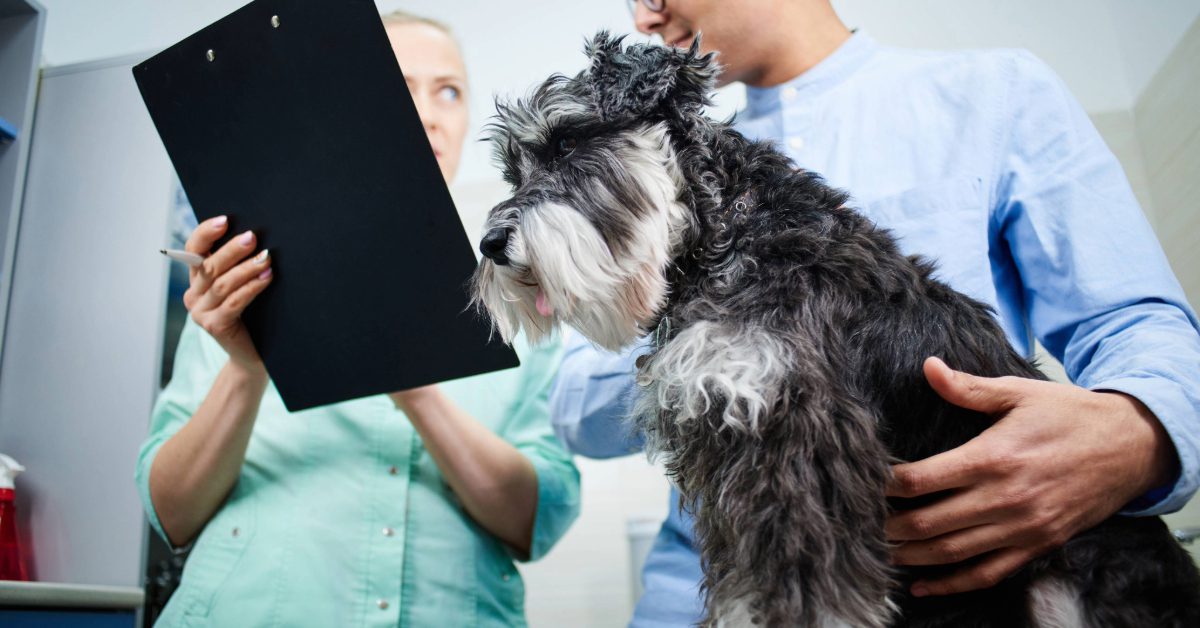
Why Is My Dog Limping on His Back Leg?
There are many reasons a dog might limp on a back leg, and the cause isn’t always obvious from the outside. Dogs can’t tell you where it hurts, so a veterinary examination is always the most reliable way to identify the source of the problem. That said, certain causes of rear leg limping in dogs are more common than others, and understanding them can help you communicate clearly with your veterinarian.
Common Causes of Rear Leg Limping in Dogs
Rear leg lameness in dogs can stem from injuries, orthopedic diseases, nerve problems, or even issues elsewhere in the body that refer pain to the leg. Here are the conditions our team at Cornerstone Veterinary Clinic sees most often when a dog is limping on a back leg:
Cruciate Ligament Injury (CCL/ACL Tear)
The cranial cruciate ligament (CCL), which is the canine equivalent of the human ACL, is one of the most commonly injured structures in a dog’s knee. When this ligament tears, partially or completely, it causes sudden and often severe rear leg limping in dogs. A dog with a CCL tear typically carries the affected leg or touches it down only lightly. This injury commonly occurs during play, jumping, or a sudden change of direction, but it can also develop gradually through chronic degeneration. Surgical repair is usually recommended for most dogs.
Hip Dysplasia
Hip dysplasia is a developmental condition where the hip joint doesn’t form properly, leading to instability and eventually arthritis. It’s one of the most common causes of rear leg limping in dogs, particularly in large and giant breeds such as German Shepherds, Labrador Retrievers, and Golden Retrievers. Dogs with hip dysplasia may sway when they walk, have difficulty rising from rest, or avoid stairs and jumping. The severity ranges from mild to debilitating, and management options range from medical therapy to surgical intervention.
Luxating Patella
A luxating patella, or slipping kneecap, is a very common cause of intermittent rear leg limping in small and toy breeds. When the kneecap slips out of its groove, it causes the dog to carry the leg up or skip while walking. The kneecap may slip back into place on its own, which is why this condition often causes intermittent limping rather than constant lameness. Surgical correction is recommended for moderate to severe cases to prevent long-term joint damage.
Muscle Strains and Soft Tissue Injuries
Active dogs, especially those that run, jump, and play hard, are prone to muscle strains and other soft tissue injuries in the hindquarters. This type of rear leg lameness often comes on after strenuous activity and may improve with rest. However, it’s important to have your veterinarian assess the injury to rule out more serious structural damage before assuming it’s just a minor strain.
Intervertebral Disc Disease (IVDD)
Spinal problems, particularly intervertebral disc disease, can cause rear leg weakness and limping in dogs. When a disc herniates or ruptures, it can press on the spinal cord or nerve roots, causing pain, weakness, or even paralysis in the hind limbs. Dogs with IVDD may drag their back feet, appear wobbly, or show sudden-onset hind leg lameness. This is a serious condition that requires prompt veterinary evaluation and often advanced imaging.
Bone Tumors
In older, large-breed dogs, bone cancer (osteosarcoma) is a significant cause of rear leg limping that is sometimes mistaken for arthritis or a soft tissue injury. Osteosarcoma causes progressive, often severe lameness and can be associated with swelling at the affected site. If your older large-breed dog develops a limp that doesn’t improve with rest, prompt evaluation is essential.
Arthritis
Osteoarthritis is very common in aging dogs and is a frequent cause of chronic rear leg limping. Arthritic dogs tend to be stiffer in the morning or after rest, may be reluctant to exercise, and often worsen in cold or damp weather. While arthritis cannot be reversed, it can be effectively managed with the right combination of veterinary therapies to maintain your dog’s comfort and mobility.
How Serious Is a Dog Limping on a Back Leg?
The answer depends on the severity and the cause. Here’s a general guide to help you decide how urgently your dog needs to be seen:
- Seek emergency care immediately if your dog cannot bear any weight on the back leg, cries out in pain, shows sudden hind limb weakness or dragging, or if there is visible trauma, swelling, or deformity.
- Call Cornerstone Veterinary Clinic same-day if your dog is limping but can still bear some weight, the limp appeared suddenly without obvious cause, or the limping is accompanied by signs of pain such as panting, restlessness, or reluctance to move.
- Schedule an appointment within a few days if your dog has a mild, intermittent limp, seems otherwise comfortable, and the limping began after minor exertion. Monitor for worsening.
Even mild limping that persists for more than 24–48 hours should be evaluated by your veterinarian. Conditions like CCL tears and hip dysplasia don’t resolve on their own and often worsen without appropriate treatment.
How Is Rear Leg Limping in Dogs Diagnosed?
At Cornerstone Veterinary Clinic, diagnosing the cause of rear leg limping begins with a thorough physical and orthopedic examination. Our veterinarians assess your dog’s gait, range of motion, pain responses, muscle mass, and neurological function. We observe how your dog moves, stands, and bears weight across all four limbs.
- X-rays: Radiographs of the affected leg, knee, hip, or spine are often the first diagnostic step and can reveal fractures, joint abnormalities, arthritis, and bone tumors.
- Advanced imaging: CT scans or MRI may be recommended when spinal disease or soft tissue injury is suspected and X-rays are inconclusive.
- Joint fluid analysis: In cases of suspected joint infection or immune-mediated disease, analyzing fluid drawn from the joint provides valuable diagnostic information.
Don’t Wait to Find Out Why Your Dog Is Limping on His Back Leg
A dog limping on a back leg is your dog’s way of telling you something isn’t right. Whether the cause turns out to be a minor strain or something requiring surgical correction, getting a proper diagnosis is always the right first step. Early evaluation leads to earlier treatment, and earlier treatment leads to better outcomes.
At Cornerstone Veterinary Clinic in Piqua, OH, our experienced veterinary team is here to help identify the cause of your dog’s rear leg lameness and develop a treatment plan that gets them back on all four feet comfortably. Call us at (937) 773-8060 or book an appointment online today.
Recent Posts
About Us
Small description of the practice goes here - maybe pull from the About Us page?