


Why Does My Cat Bite Me?
If you’re wondering, “Why does my cat bite me?”, the most common reasons are overstimulation during petting, redirected aggression, fear, play behavior left over from kittenhood, or an underlying medical issue causing pain or discomfort. Cat bites can feel confusing, especially when they seem to come out of nowhere during what looked like a normal, affectionate petting session. At Cornerstone Veterinary Clinic in Piqua, OH, we talk with cat owners about this behavior often, since understanding what’s driving it is the first step toward a calmer relationship with your cat. Below, we’ll break down why cats bite, the most common triggers, how to respond safely in the moment, and when biting might signal something a veterinarian should look into. Once you understand the underlying cause, most biting behavior becomes much easier to prevent and manage going forward.
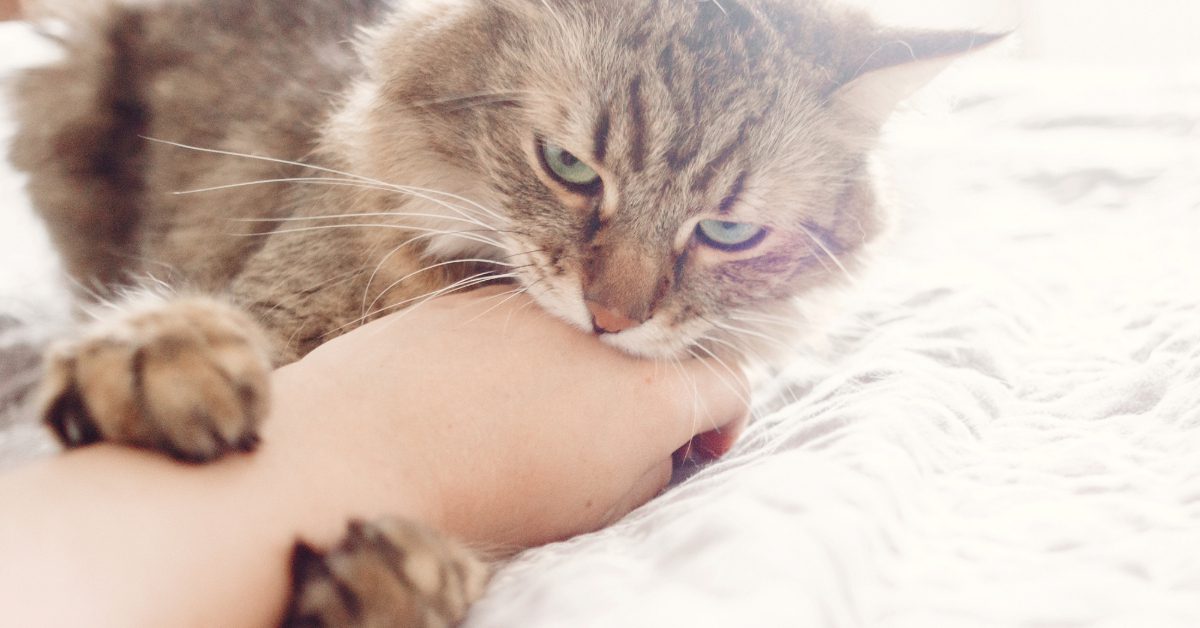
Why Do Cats Bite?
Communication, Not Malice
Cats don’t bite out of spite or bad intentions, even though it can certainly feel that way in the moment. Biting is a form of communication, and understanding why your cat bites starts with recognizing that your cat is telling you something, whether that’s “I’ve had enough” or “I’m scared” or “I’m in pain.” Cats have a much narrower window of tolerance for physical affection than dogs, and a bite is often their way of setting a boundary when other, more subtle signals have been missed. This doesn’t mean your cat dislikes you; it usually just means their tolerance threshold has been reached faster than expected, and that threshold can vary from day to day depending on your cat’s mood and environment.
Reading the Warning Signs
Before biting, most cats give warning signs that owners often overlook. A tail that starts twitching or thumping, ears that flatten or rotate backward, dilated pupils, or skin that ripples along the back are all signs that a cat is reaching its limit and needs the interaction to stop. Recognizing the question “Why does my cat bite me?” in the moment often comes down to noticing these small cues before the bite happens, rather than being surprised when it does. Cats vary in how obvious these signals are, so learning your own cat’s individual body language over time is genuinely one of the best tools you have as an owner.
Common Reasons Cats Bite Their Owners
Petting-Induced Overstimulation
Repetitive petting, especially along the back or near the base of the tail, can build up sensory input faster than a cat can process it, leading to a sudden nip even from a cat who initiated the interaction by climbing into your lap. This pattern, sometimes called petting-induced aggression, is one of the single most common answers to “Why does my cat bite me?” among otherwise affectionate, well-socialized cats.
Play Aggression
Kittens learn bite inhibition through play with littermates, and cats who missed that socialization, or who were encouraged to bite hands and fingers as playthings, often carry rough play habits into adulthood. If a cat pounces, grabs, and bites during what looks like play, this is usually the explanation behind why your cat bites during otherwise normal interactions. This type of biting tends to be more predictable, often triggered by fast movement, dangling fabric, or hands and feet moving under blankets, and it’s usually accompanied by an excited, playful body posture rather than fear.
Fear or Redirected Aggression
Cats can also bite out of fear, particularly if they feel cornered, startled, or unable to escape a situation. Redirected aggression happens when a cat becomes agitated by something it can’t reach, like another animal outside a window, and then bites whoever happens to be nearby, since the frustration has to go somewhere and the nearest moving target often becomes the outlet. Owners are often left asking “Why does my cat bite me?” in these situations without realizing the bite had nothing to do with them personally, since the underlying trigger was something else entirely and the person simply happened to be closest at the wrong moment.
Common triggers for fear-based or redirected biting include:
- Loud noises, sudden movements, or unfamiliar visitors in the home
- Seeing another animal through a window or door
- Being picked up or restrained unexpectedly
- Changes in the household, such as new pets or furniture rearrangement
How to Respond When Your Cat Bites
In the Moment
When a bite happens, the safest response is to stay calm and simply withdraw your hand or body without pulling away sharply, since sudden movement can trigger a chase-and-bite instinct. Avoid yelling, tapping your cat’s nose, or any form of physical correction, as these responses tend to increase fear and can make future biting more likely rather than less. Punishment teaches the cat to fear the person delivering the punishment, which often damages trust further.
Building Better Patterns Over Time
Paying attention to your cat’s early warning signs and stopping petting before they escalate is one of the most effective long-term strategies for reducing bites, since it allows the interaction to end on a positive note rather than a defensive one. Offering toys for rough play instead of hands, and giving your cat control over when interactions start and stop, both help address “Why does my cat bite me?” by reducing the situations that lead to overstimulation or fear in the first place. Short, frequent interactions that end before your cat shows signs of frustration tend to build trust far more effectively than longer sessions that push past their comfort level.
When Cat Biting Is a Concern
Sudden changes in biting behavior, especially in a cat who wasn’t previously prone to it, can sometimes point to an underlying medical cause. Pain from dental disease, arthritis, or an injury can make a cat far less tolerant of touch, and understanding “Why does my cat bite me?” in these cases requires ruling out physical discomfort rather than assuming it’s purely behavioral. A cat who suddenly resists being picked up, brushed near a specific area, or touched on the head may be signaling localized pain rather than a behavioral shift.
When to Talk to Your Veterinarian
If biting is frequent, escalating, or paired with other changes like decreased appetite, hiding, or reduced grooming, it’s worth scheduling a visit rather than waiting to see if things resolve on their own. Our team at Cornerstone Veterinary Clinic in Piqua, OH can help determine whether pain or illness is contributing to the behavior and can also point you toward behavioral resources if the biting turns out to be purely situational. A thorough exam rules out the medical possibilities first, which makes any behavioral guidance that follows far more targeted, useful, and effective.
Building a Better Relationship With Your Cat
Understanding “Why does my cat bite me?” is really about learning your individual cat’s communication style and respecting the signals they give before things escalate to a bite. Most biting behavior improves significantly once owners start recognizing early warning signs and adjusting how they interact, often within just a few weeks of consistent, gentler handling. If you’re still asking “Why does my cat bite me?” after trying these approaches, or if the behavior seems sudden or out of character, call Cornerstone Veterinary Clinic at (937) 773-8060 or book an appointment online to rule out an underlying medical cause. With a little patience and the right information, most cats and their owners find their way back to a comfortable, trusting relationship over time.
Recent Posts
About Us
Small description of the practice goes here - maybe pull from the About Us page?